


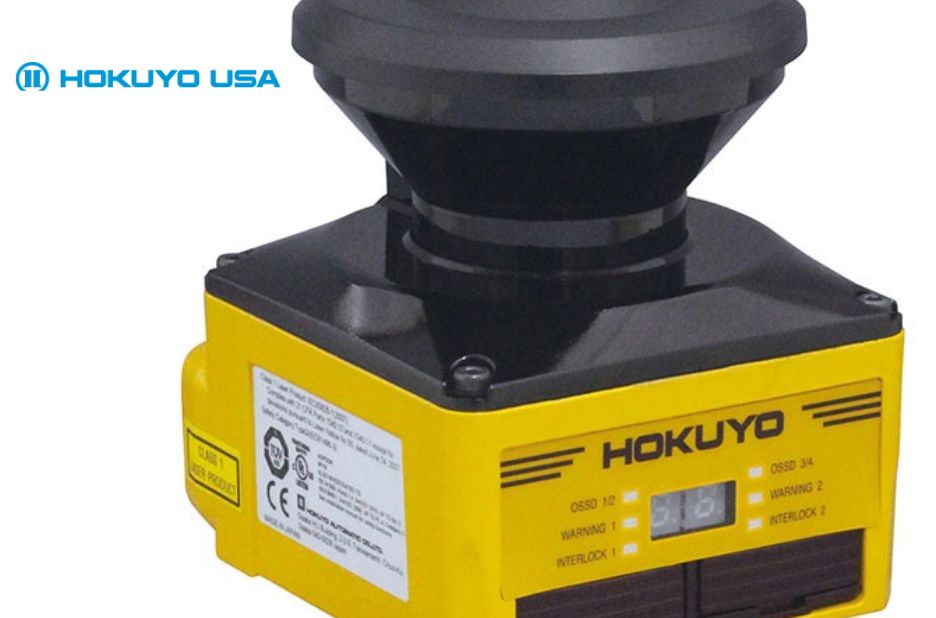
Overview of sensing technologies
Advances in autonomous systems increasingly rely on compact, accurate distance measurement. 2D lidar sensors offer planar awareness by emitting laser pulses and detecting reflections to map surroundings, enabling reliable obstacle detection and basic SLAM in controlled environments. Their footprint is typically smaller and more affordable than full 2D lidar sensors 3D systems, making them a practical choice for compact robots and mobile platforms. Engineers prioritise stability, low power draw, and resilience to lighting changes, which these devices handle well when properly calibrated and integrated with suitable filtering and fusion techniques.
How 2D lidar sensors operate
The core operation involves a rotating or scanning mechanism that sweeps a laser across a horizontal plane, collecting range data at numerous angles. Software converts these readings into a 2D point cloud, which can be used for map building, obstacle avoidance, and navigation. Critical factors include angular resolution, maximum range, refresh rate, and latency. Proper calibration aligns the sensor with the robot’s frame of reference, ensuring accurate motion tracking and sensor fusion with other modalities such as cameras or ultrasonics.
Practical installation considerations
Choosing a mounting position, field of view, and environmental protection are essential for dependable performance. Positioning should minimise occlusions and ground reflections while keeping the sensor clear of vibrations. In harsh settings, durable housings and IP-rated protection extend life. Software should include filtering to remove spurious data from reflective surfaces and wheel odometry drift. Realistic testing under varying lighting, floor textures, and obstacle densities helps validate reliability before deployment in dynamic environments.
Comparing models and use cases
Different models offer trade offs between range, resolution, and update cadence. Applications such as indoor mapping, robotics navigation, and assistive devices benefit from moderate ranges with precise angular steps. For larger spaces, higher-end variants provide extended reach but may incur higher cost and power usage. Decision making improves when combining 2D lidar with complementary sensors, enabling robust obstacle detection and smoother path planning in transit scenarios.
Conclusion
When selecting sensors for a compact autonomous platform, consider how 2D lidar sensors fit your operational needs, balancing cost, performance, and integration complexity. Field tests remain essential to quantify reliability across surfaces and lighting conditions, while cross‑sensor fusion can compensate for individual limitations. For teams evaluating regional suppliers and service support, a practical point of reference is Hokuyo USA