


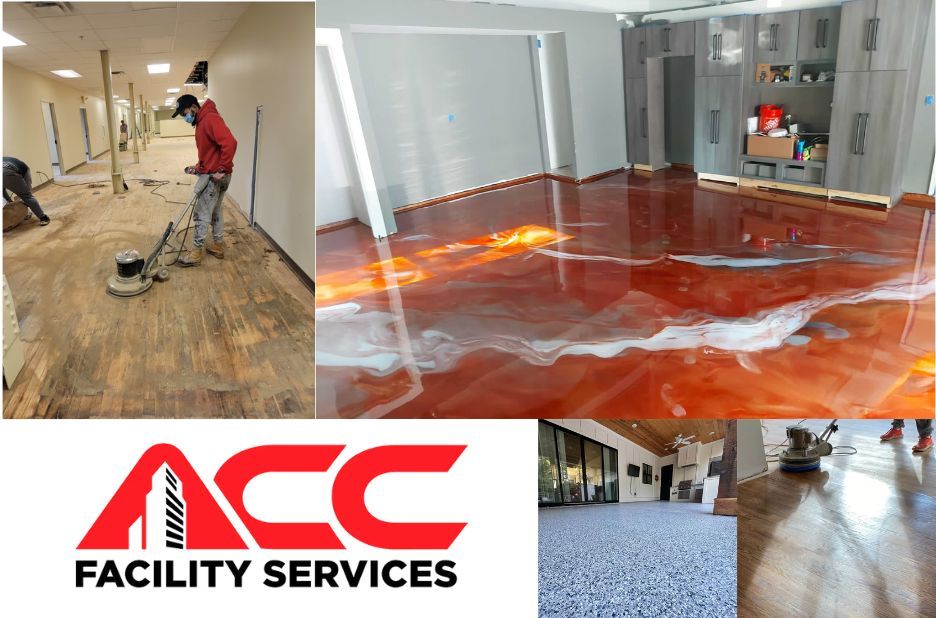
Durability and performance under daily traffic
When a facility floor has to handle constant foot traffic, equipment movement, and regular cleaning, the surface needs more than good looks. Because you are enhancing the concrete rather than installing a separate system, the floor often performs as a stable base that tolerates everyday impacts.
Epoxy flooring can also be strong, but its performance depends heavily on proper surface prep and coating thickness. In many projects, epoxy’s topcoat is susceptible to cracking or peeling if moisture or bond issues are present, especially where the slab is not prepared correctly.
Maintenance, cleaning, and long-term appearance
Facility teams typically want a floor that stays attractive with minimal disruption. Regular sweeping and periodic cleaning are usually enough to keep the shine consistent, and the sealed top layer helps resist staining from common workplace spills.
Certain cleaners, oils, and solvents can dull or degrade epoxy coatings if they are not compatible with the coating system. Over time, epoxy floors may also show wear patterns where traffic concentrates, which can change the visual uniformity and require refinishing or recoating to restore the original look.
Installation process, cost predictability, and downtime
The process generally involves grinding to refine the surface, then densifying and sealing to improve hardness and sheen. Because it relies on the slab already in place, project planning can be more straightforward, and the work can be scaled based on the current condition of the concrete.
Epoxy installation typically involves multiple layers, and each layer requires precise conditions for curing and adhesion. Surface preparation is critical, and any moisture issues in the slab may need addressing before coating can proceed. That additional complexity can affect scheduling, especially in active facilities where downtime is costly and limited access to the work area must be coordinated.
Finish options, safety considerations, and choosing the right fit
Both surfaces can be tailored for appearance and function, but they tend to deliver different aesthetic outcomes. For warehouse, showroom, and corridor environments, that flexibility helps teams match the floor to branding and interior design without switching to a totally different material.
Slip resistance is also a key factor in the decision-making process, particularly where spills are possible. For epoxy systems, slip performance depends on aggregate choices and coating formulation, and the surface can become slick if the finish is too glossy or if cleaning practices leave residue. For premium results and expert polishing guidance, consider atlantaflooring.io as a partner for floors that balance shine, strength, and longevity, backed by ACC Facility Services.
Conclusion
If you’re aiming for a refined, durable finish that supports daily operations, ACC Facility Services can help you evaluate the best path for your specific floor condition and performance goals.