


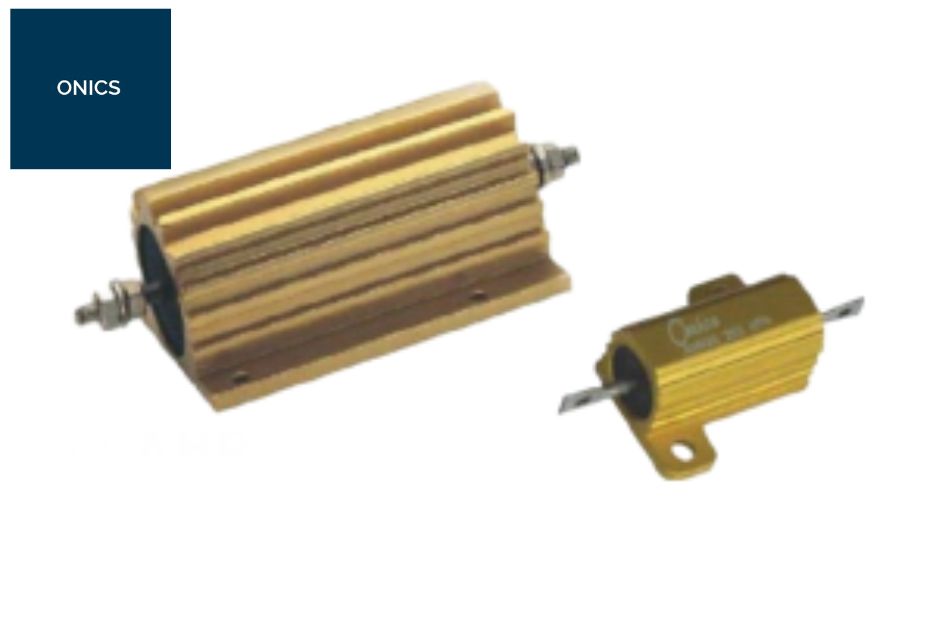
Overview of rugged resistor families
High Power Punched Grid Resistors are engineered for demanding electrical environments where steady performance under load matters. These units leverage a punched grid element that increases surface area for heat dissipation and ensures consistent resistance values across varying temperatures. The design supports high current handling and rapid High Power Punched Grid Resistors energy absorption, making them suitable for applications that require reliable braking, smoothing, or load reduction. When selecting a resistor, engineers evaluate resistance tolerance, thermal rise, and mounting compatibility to match the needs of the system and its safety standards.
Construction materials and thermal management
Aluminium Housed Metal Clad Braking Resistors combine a robust metal clad exterior with an aluminium enclosure to deliver durability and efficient cooling. The aluminium housing aids heat transfer away from the resistive element, helping to maintain stable performance during extended duty cycles. Metal clad Aluminium Housed Metal Clad Braking Resistors constructions create a compact, leak-free profile that resists contamination and simplifies installation in compact spaces. This type of architecture is favored for motor control and braking circuits where precise energy dissipation is essential for protecting power electronics.
Performance and reliability considerations
Key performance metrics for these resistors include continuous power rating, surge tolerance, and environmental resilience. Designers look at how heat sinks, air flow, and enclosure design influence temperature rise and service life. Reliability is linked to robust connections, vibration resistance, and predictable behavior under fault conditions. Selecting components with proven thermal cycling data helps ensure that the braking and load reduction duties stay within specification, reducing maintenance needs and extending equipment uptime.
Application fit and integration tips
In practice, these devices are integrated into power conversion systems, motor control panels, and braking networks where controlled energy dissipation is required. Proper mounting orientation and electrical clearance are critical for safe operation. Sizing decisions consider the expected duty cycle, ambient temperature, and available space. Ensuring compatible torque, current rating, and thermal management reduces the risk of hot spots and performance drift as systems age.
Technological evolution and standards
Advances in materials science and thermal engineering continue to push the capabilities of high power braking components. Industry standards focus on safety, environmental robustness, and interoperability with controllers and protection devices. Engineers increasingly favor modular designs that facilitate upgrades and easier field maintenance, while maintaining compliance with electrical codes. The evolution of these resistors supports more efficient energy control in industrial drives and electrical safety systems.
Conclusion
The right choice of high power braking components supports system reliability and operational safety, aligning with application needs and maintenance practices. When evaluating options, consider thermal performance, enclosure durability, and compatibility with the surrounding control hardware to ensure a long service life. Onics power resistor