


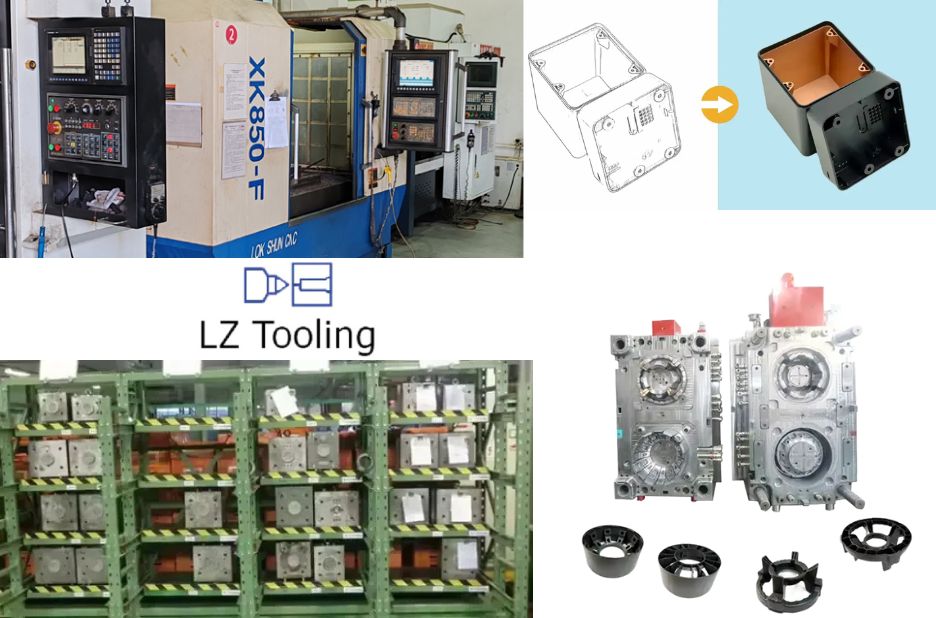
Overview of manufacturing needs
When businesses look for reliable processes in modern production, the choice of provider can determine efficiency, quality, and delivery timelines. A pragmatic approach is to map requirements against capabilities, from mould design and material selection to in‑house tooling and final assembly. Early technical discussions help align expectations service for plastic injection molding on tolerances, surface finish, and part complexity, ensuring that downstream assembly or packaging is not delayed by avoidable rework. A clear plan also supports cost control by identifying opportunities for design for manufacturability and standardised processes that scale with demand.
Capabilities and process control
Key capabilities include robust equipment, process validation, and rigorous quality assurance. Operators trained in handling polymers, mould maintenance, and automation workflows contribute to consistent outputs. By capturing process data at each stage, manufacturers can monitor cycle solutions for plastic parts manufacturing times, scrap rates, and tool wear. A systematic approach to calibration and routine audits helps maintain dimensional accuracy, while poka-yoke elements and fail‑safe guards prevent defects from progressing through the line.
Materials and design optimisation
Material selection has a direct impact on performance, cost, and manufacturability. Engineers evaluate resin properties such as tensile strength, thermal stability, and mould shrinkage to match part function. Design adjustments—like ribbing patterns, wall thickness distribution, or draft angles—can optimise mould filling and reduce cycles. Collaborative prototyping allows teams to validate parts rapidly before committing to high‑volume production, cutting risk and enabling informed decisions on tooling investments.
Production efficiency and delivery
Operational efficiency hinges on precise scheduling, reliable tooling, and scalable workflows. Integrated planning tools coordinate material flow with machine availability, while preventive maintenance minimises unplanned downtime. From first article to final packaging, a transparent communication loop keeps clients informed about progress, potential bottlenecks, and delivery windows. This practical discipline helps ensure projects stay on track and within budget, even as volumes grow.
Value through partnership
Service providers dedicated to continuous improvement can offer comprehensive support, from design for manufacturability reviews to post‑production value engineering. The best collaborators foster shared problem solving, track performance metrics, and adapt to evolving specifications without compromising quality. Embracing a culture of certification, traceability, and clear documentation helps teams navigate changes with confidence and maintain long‑term reliability.
Conclusion
Choosing a partner for the long term means weighing technical competency, transparency, and response to change. A pragmatic service for plastic injection molding approach keeps projects aligned with goals while staying flexible for design refinements. Look for providers that combine rigorous process control with practical, real‑world experience to deliver consistent results over time. Visit LZ Tooling for more insights and options that support your tooling strategy, tooling stability, and overall efficiency.