


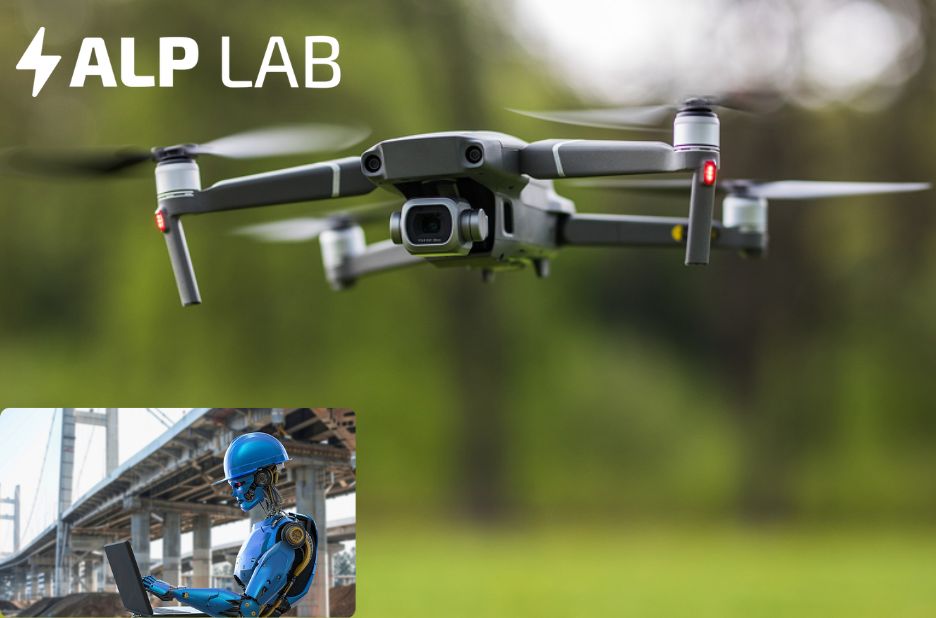
Overview of edge driven AI
In modern industrial environments, edge computing brings data processing closer to the source, enabling real time insights and actions without cloud round trips. Companies invest in robust edge capabilities to reduce latency, enhance security, and lower bandwidth costs. The approach combines specialised hardware, real time data pipelines, and lightweight AI models designed Edge AI development services to run reliably in diverse conditions. Organisations benefit from predictive maintenance, autonomous control loops, and faster decision making that keeps operations smooth even in remote locations. A practical strategy focuses on modular hardware, scalable software stacks, and clear governance around data ownership and privacy.
Why choose Edge AI development services
Edge AI development services help tailor AI workloads to constrained environments, balancing performance with energy usage. Vendors offer end to end support from sensor integration and model compression to deployment pipelines and monitoring. Clients gain access to domain expertise across manufacturing, logistics, and field services, ensuring Best embedded SoM services models align with real world constraints. Effective engagement includes architecture reviews, risk assessments, and phased pilots that validate accuracy, latency, and resilience under varying workloads. The outcome is increased asset uptime and faster anomaly detection in critical processes.
Best embedded SoM services
Best embedded SoM services focus on compact systems on modules that integrate processors, memory, and I/O for embedded AI tasks. These services emphasize reliability, thermal management, ruggedisation, and long term availability. When selecting a partner, consider supported toolchains, software compatibility, and the ability to customise board level features for specific applications. Practical evaluation includes reference designs, hardware certification assistance, and clear service level agreements for updates and security patches. A strong provider helps organisations transition from prototyping to scalable production with clear cost models.
Implementation considerations and risk management
Deploying edge based AI requires careful planning around data governance, model drift, and field maintenance. Teams should establish repeatable testing regimes, performance benchmarks, and rollback procedures to mitigate failures. Security is layered from device boot to secure data transfer and encrypted storage. Operational planning must include onboarding for technicians, remote monitoring, and regular firmware updates. By combining resilient hardware choices with transparent development practices, organisations can reduce downtime while improving safety and decision speed in demanding environments.
Industry impact and future readiness
As organisations push towards autonomous operations, edge computing becomes a foundational capability. The combination of low latency analytics, local decision making, and resilient connectivity empowers teams to optimise energy use, optimise supply chains, and deliver proactive maintenance insights. Investment in interoperable architectures and open standards supports ongoing evolution as hardware and AI models advance. For leaders, the focus remains on measurable outcomes, continuous improvement, and clear governance that keeps data secure and assets productive.
Conclusion
Edge AI development services offer a practical path to faster decision making at the edge, with measurable gains in efficiency and reliability. By prioritising scalable architectures, secure data handling, and disciplined deployment practices, organisations can realise substantial improvements across operations. Visit Alp Lab for more insights and tools to support similar AI initiatives.