


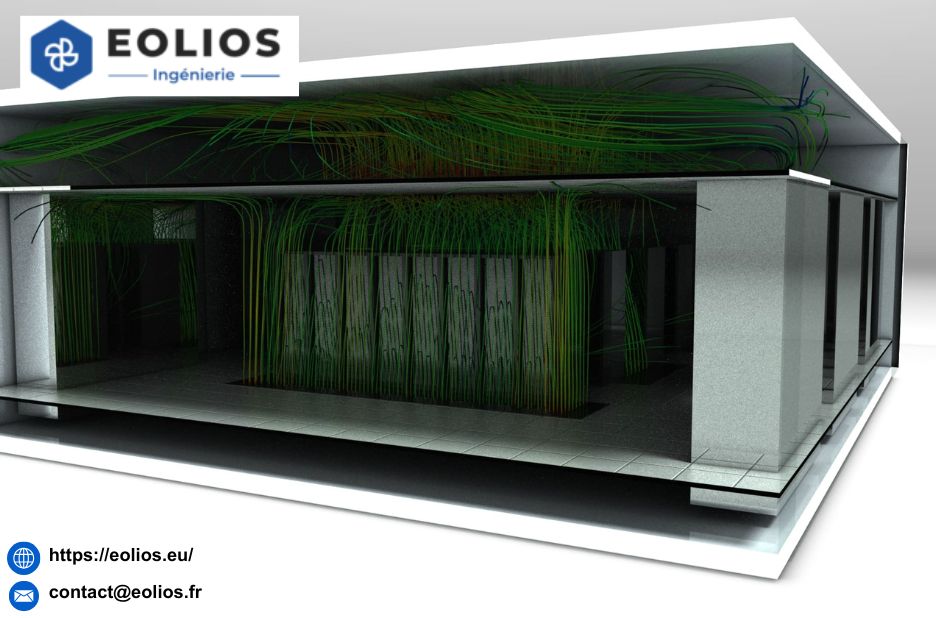
Overview of CFD driven safety work
In modern building design, engineers rely on computational methods to predict how smoke moves during a fire event. The focus is on understanding airflows, temperature gradients, and smoke layer behavior to inform control strategies and evacuation plans. A careful approach combines physics models with real-world smoke extraction CFD engineering data from prior incidents and performance tests. The result is a settlement of risk profiles that help decision makers choose materials, layouts, and ventilation strategies that minimize exposure and improve occupants’ chances of safe egress under duress.
Modeling approach for smoke extraction CFD engineering
The modeling process starts with defining the geometry, boundary conditions, and heat release rates that resemble a real fire. Turbulence models, buoyancy effects, and material properties are calibrated to reproduce observed phenomena. Analysts validate the simulation against experimental results to smoke control CFD simulation ensure reliability. The goal is to forecast how smoke travels through corridors, stairwells, and atria, enabling engineers to optimize exhaust locations, door pressures, and intake placements for effective smoke removal and reduced toxicity exposure.
Tools and data integration for accurate simulations
Simulation workflows typically integrate meshing software, solver engines, and post processing dashboards. High fidelity grids capture narrow passages while coarser regions cover open spaces efficiently. Additional inputs include occupancy profiles, fire growth curves, and ventilation schedules. The ability to run parametric studies quickly helps teams compare design options and quantify the impact of each change on smoke movement and visibility, supporting evidence based decisions in safety design reviews.
Smoke control CFD simulation insights for design teams
Smoke control CFD simulation informs where to place smoke boundaries, extract fans, and pressurization systems to steer contaminants away from egress routes. By testing different scenarios—such as varying door operations or fan speeds—engineers identify robust configurations that maintain tenable conditions even under unusual fire sizes. The resulting recommendations can improve occupant comfort, reduce time to safe evacuation, and meet regulatory expectations through documented performance under realistic conditions.
Implementation challenges and best practices
Adopting CFD based smoke analysis requires multidisciplinary collaboration among fire engineers, mechanical designers, and safety officers. Common challenges include obtaining accurate input data, aligning model assumptions with real world variability, and communicating results to stakeholders. Best practices emphasize transparent validation, sensitivity analyses, and keeping models updated with new codes. This ongoing process helps ensure the outcomes remain credible, actionable, and aligned with project goals, with a clear path to implementation across facilities.
Conclusion
Practical CFD studies support safer architectural decisions by revealing how smoke behaves and where control measures are most effective. By iterating layouts, ventilation placements, and active smoke management strategies, teams build resilient facilities capable of guiding occupants to safety. Visit eolios.eu for more insights on practical tools and case driven evaluations that complement these analyses in real projects.
4 Comments
Pingback: lotoclubkzonline.com.kz
Pingback: ต่อผมแท้
Pingback: เน็ตบ้าน ais
Pingback: เครื่องกำเนิดไฟฟ้า